How Does Boric Acid Powder Work Against Insects and Pests?
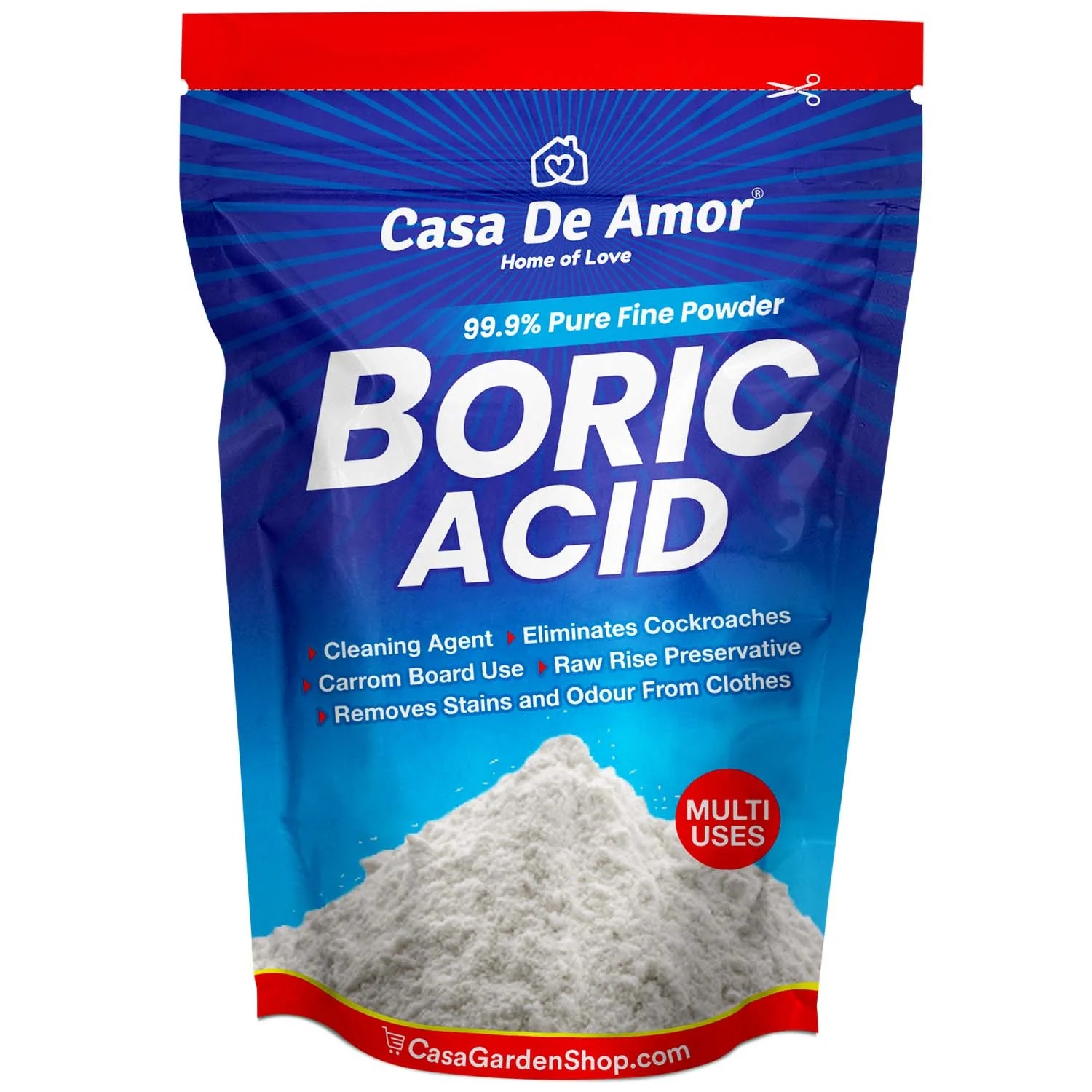
Boric acid powder is a compound containing boron, hydrogen, and oxygen. It is commonly available as a fine powder and has applications in pest-control products, household products, and some gardening uses.
Insects and household pests can become difficult to manage when they find suitable sources of food, moisture, and shelter. Many pest-control solutions work by directly affecting an insect's nervous system, while others act differently after pests come into contact with or consume them. Boric acid powder is one such pest-control substance that has been used in products designed to manage certain insects, including ants, cockroaches, and other crawling pests. Understanding how it works can help you use it more responsibly and effectively.
What Is Boric Acid Powder?
Boric acid powder is a compound containing boron, hydrogen, and oxygen. It is commonly available as a fine powder and has applications in pest-control products, household products, and some gardening uses.
When used for pest management, the powder generally works through physical and toxic effects after susceptible insects come into contact with or consume it. However, effectiveness depends on the pest species, formulation, placement, and conditions in the area being treated.
It is important to distinguish boric acid from borax. Although both contain boron and are chemically related, they are different compounds and should not automatically be considered interchangeable for every application.
How Does Boric Acid Powder Work Against Insects?
The effectiveness of boric acid as a pest-control ingredient comes from how insects interact with the substance.
1. Insects Can Pick Up the Powder
When an insect walks through a treated area, particles can adhere to its body, particularly its legs and other external surfaces. The insect may subsequently ingest some of the material while grooming itself.
This means an insect does not necessarily have to intentionally consume a visible amount of powder for exposure to occur.
2. It Can Affect an Insect After Ingestion
Once consumed, boric acid can interfere with normal physiological processes in susceptible insects. The material is not simply acting as a conventional contact poison. In many pest-control applications, ingestion is an important part of how boric acid affects insects.
The exact response varies according to the insect species and the amount of exposure.
3. It Can Contribute to Dehydration
Dry powder can also have a physical effect on insects. When particles come into contact with an insect's body, they can interfere with its protective outer layer and contribute to moisture loss.
This is one reason dry, correctly placed applications can be useful in certain pest-management situations.
4. Grooming Can Increase Exposure
Many insects regularly clean their bodies using their legs and mouthparts. If powder has attached to their body, grooming can transfer some of it into the digestive system.
This makes placement important. A pest may encounter the material while travelling through cracks, gaps, corners, or other areas where it regularly moves.
Which Insects Can Boric Acid Help Control?
Boric acid is used in certain products intended to control crawling insects. Common examples include cockroaches and ants. Some formulations may also target other pests.
However, not every boric acid product is approved for every insect or location. The product label should always determine where and how a particular formulation can legally and safely be used.
For example, a product intended for household pest control should not automatically be applied to edible crops simply because the active ingredient is boric acid.
Why Does Placement Matter in Pest Control?
Using more powder does not necessarily mean better pest control. In fact, excessive application can make a treatment less effective in some situations.
A thin, appropriately placed application may be more useful than a large visible pile because insects can avoid heavy deposits. Placement should focus on areas where the target pest is known to travel or hide.
Potential locations may include cracks, crevices, wall voids, and other inaccessible pest pathways, depending on the product's label directions.
Before applying any pest-control product, identify the pest and follow the instructions provided for that specific product.
Boric Acid Powder and Ant Control
Ant colonies can be challenging because killing individual worker ants does not necessarily eliminate the colony. Some ant-control products use boric acid in bait formulations. In these products, worker ants consume the bait and may carry material back to the colony.
The effectiveness of a bait depends on several factors, including the ant species, bait attractiveness, placement, and colony behavior.
Therefore, simply spreading loose powder around an area is not equivalent to using a properly formulated ant bait.
Boric Acid Powder and Cockroach Control
Cockroaches commonly move through dark cracks, gaps, and sheltered areas. Certain boric-acid-based products can be used in locations where cockroaches travel.
For cockroach management, sanitation and exclusion are also important. Removing food crumbs, reducing accessible water, repairing leaks, and sealing cracks can reduce the conditions that allow infestations to persist.
A pest-control ingredient works better as part of an overall pest-management approach rather than as a substitute for basic hygiene and prevention.
Important Safety Precautions
Although boric acid has useful applications, it should be handled carefully. Avoid inhaling the powder and prevent unnecessary contact with the eyes and skin. Keep it away from children and pets, and store it in its original, properly labelled container.
Do not use a product on plants, soil, food-contact surfaces, or other locations unless its label specifically permits that use. Different formulations can have different instructions and concentrations.
If accidental exposure occurs, follow the product label's first-aid directions and seek appropriate medical or poison-control advice when necessary.
Is Boric Acid an Effective Pest-Control Solution?
Boric acid can be effective against certain insects when it is included in an appropriate pest-control product and used according to its label. Its action can involve ingestion, exposure through contaminated surfaces, grooming, and moisture loss.
However, results are influenced by the target species, infestation level, formulation, placement, and environmental conditions. Correct identification of the pest is therefore an important first step.
For persistent infestations, combining appropriate pest-control treatment with sanitation, moisture management, and sealing of entry points can provide a more complete approach.
Final Thoughts
Boric acid powder works against certain insects through a combination of ingestion and physical effects. Insects may pick up particles while moving through treated areas and ingest them during grooming, while exposure can also contribute to moisture loss. These mechanisms make boric acid a useful ingredient in some pest-control formulations.
The key is responsible use. Always select a product designed for the pest and location being treated, follow its label directions, and take appropriate precautions around people, pets, plants, and food.
FAQs
1. How does boric acid powder kill insects?
Boric acid can affect susceptible insects after ingestion and exposure. Insects may pick up particles on their bodies and ingest them during grooming. Exposure can also contribute to moisture loss and disruption of normal physiological functions.
2. Does boric acid powder work against cockroaches?
Yes, certain boric-acid-based products are designed to control cockroaches. Effectiveness depends on the formulation, placement, infestation, and correct use according to the product label.
3. Can boric acid powder kill ants?
Boric acid is used in some ant-control bait products. Worker ants may consume the bait and transfer material within the colony. Results depend on the ant species and the formulation used.
4. Is boric acid powder safe to use around plants?
It should not automatically be considered safe for plants. Boron is required by plants in small amounts, but excessive boron can damage plants. Only use a product on plants or soil when its label specifically allows that application and provides appropriate directions.
5. Is boric acid the same as borax?
No. Boric acid and borax are different chemical compounds, although both contain boron. They should not be treated as interchangeable for pest control or gardening applications.
6. Does using more boric acid powder make pest control more effective?
Not necessarily. Excessive application can be counterproductive because some insects may avoid heavy deposits. Follow the application rate and placement instructions provided on the specific product label.
7. Can boric acid powder be used for every type of insect?
No. Its effectiveness varies by insect species and product formulation. Always check whether the particular product is labelled for the target pest and intended application area.
8. What precautions should be taken when using boric acid powder?
Avoid inhaling the powder and unnecessary skin or eye contact. Keep it away from children and pets, store it safely, and follow all product-label instructions regarding application, storage, and disposal.