1 Ton Inverter AC Buying Guide: Everything You Need to Know Before Purchasing
Buying a 1 ton inverter AC? Compare cooling capacity, energy ratings, features, electricity consumption and buying tips with this practical guide.
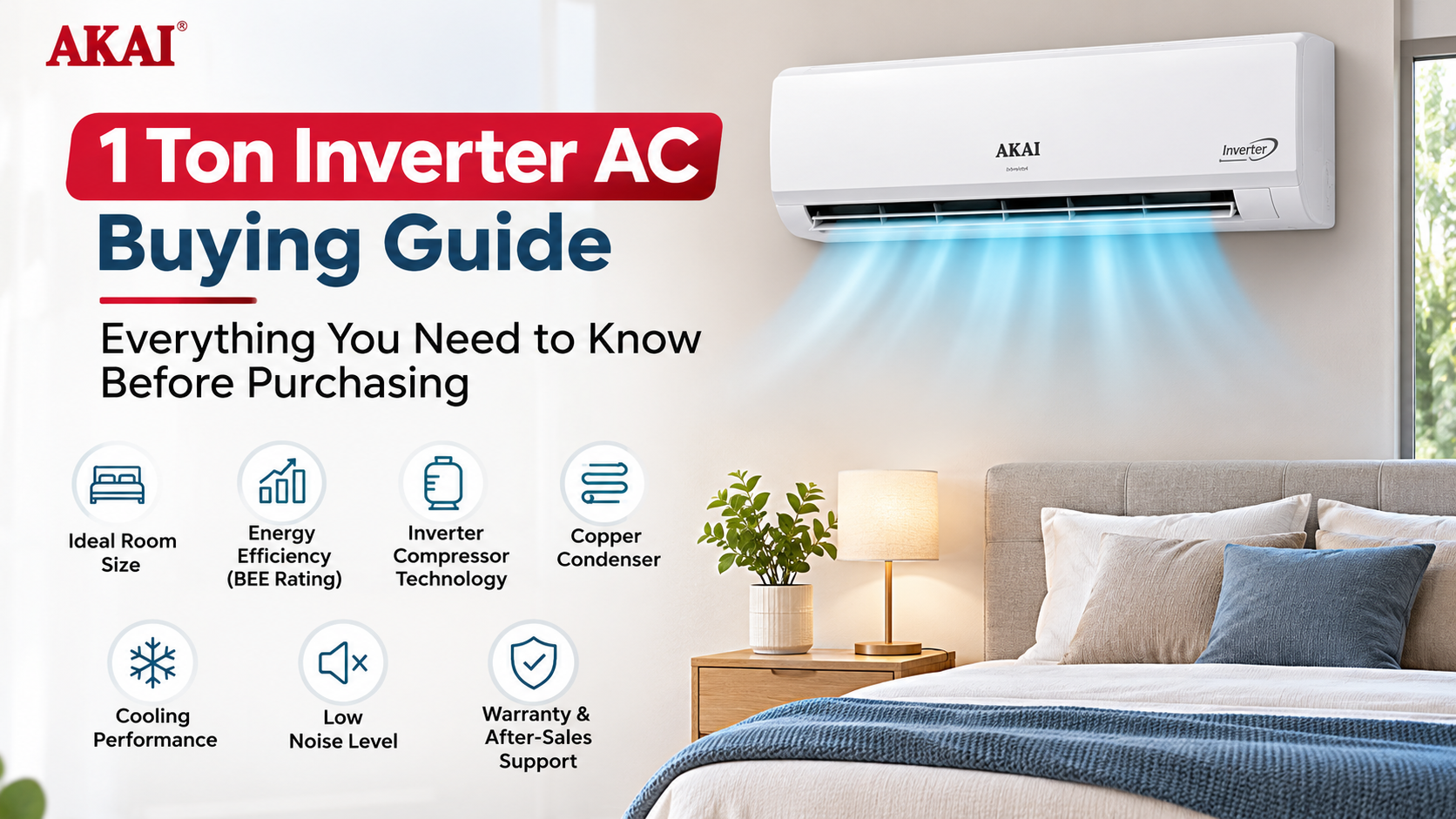
Choosing the right air conditioner is important for maintaining comfortable indoor temperatures without unnecessarily increasing electricity bills. If you have a small bedroom, study room, or compact living space, a 1 ton inverter AC can be a practical cooling solution. It offers adjustable cooling performance, efficient compressor operation, and temperature control suited to smaller rooms when the capacity matches the room conditions.
However, selecting an air conditioner involves more than checking its tonnage or price. Factors such as room size, energy ratings, inverter technology, cooling performance, condenser material, noise levels, and maintenance requirements all influence the overall ownership experience.
Whether you are purchasing your first air conditioner or replacing an older model, understanding these features can help you make a better decision. This buying guide explains what to consider before purchasing a 1 ton inverter AC and how to choose a model that suits your cooling requirements.
What Is a 1 Ton Inverter AC?
A 1 ton air conditioner refers to its cooling capacity, not its physical weight. One ton of refrigeration is equivalent to approximately 12,000 BTU per hour, or 3.517 kW of cooling capacity.
An inverter AC uses a variable-speed compressor that adjusts its operating speed according to the cooling demand. Instead of repeatedly switching between full operation and complete shutdown, the compressor can increase or decrease its speed to maintain the desired room temperature.
For example, when you switch on your air conditioner in a warm bedroom, the compressor may initially operate at a higher speed to cool the room. Once the temperature approaches your selected setting, it can reduce its speed to maintain comfortable conditions.
This technology makes inverter air conditioners a suitable option for people looking for consistent cooling and potentially lower electricity consumption compared with conventional fixed-speed models.
Is a 1 Ton Inverter AC Suitable for Your Room?
Room size is one of the most important considerations when buying an air conditioner. A 1 ton inverter AC is generally suitable for smaller rooms, but the exact requirement depends on several environmental factors.
Consider the following points before selecting the best 1 ton inverter AC:
1. Room Size
A compact bedroom or study room may not require the same cooling capacity as a large living room. A 1 ton AC can be appropriate for a smaller space, depending on its layout and heat exposure.
Consider these factors:
-
Room dimensions and ceiling height.
-
Number and size of windows.
-
Direct sunlight entering the room.
-
Number of people regularly occupying the space.
-
Heat generated by computers, televisions, and other appliances.
A small bedroom with limited sunlight may cool comfortably with a 1 ton air conditioner. However, a similarly sized room on the top floor with significant afternoon sunlight may require a higher cooling capacity.
2. Room Insulation
Insulation affects how effectively a room retains cool air. Poorly insulated walls, large windows, and gaps around doors can allow heat to enter continuously.
If your room receives considerable outdoor heat, consider improving insulation and reducing direct sunlight with curtains or blinds. These changes can help your air conditioner maintain the selected temperature more efficiently.
3. Number of Occupants
People generate body heat, which adds to the cooling load. A bedroom occupied by one person may have different cooling requirements from a room regularly used by three or four people.
Similarly, rooms containing several electronic devices may need additional cooling capacity.
Buying tip: Do not select a 1 ton inverter AC based on room size alone. Ask the dealer or an air-conditioning professional to assess the actual cooling load if your room has unusual heat exposure or ventilation conditions.
Important Features to Check Before Buying a 1 Ton Inverter AC
Not all inverter air conditioners offer the same specifications. Comparing important features can help you identify a model that delivers the right balance of comfort, efficiency, and long-term value.
1. Inverter Compressor Technology
The compressor is one of the most important components of an air conditioner. Inverter technology allows the compressor to adjust its speed depending on the cooling requirement.
Its potential benefits include:
-
More consistent indoor temperatures.
-
Reduced temperature fluctuations.
-
Variable compressor operation according to cooling demand.
-
Potentially lower electricity consumption under suitable operating conditions.
When comparing models, check the type of inverter compressor, its operating range, warranty coverage, and manufacturer specifications.
2. Energy Efficiency Rating
Electricity consumption is a major concern for households that use air conditioners regularly. Before purchasing a 1 ton inverter AC, check its energy efficiency rating.
In India, the Bureau of Energy Efficiency (BEE) provides star ratings for eligible air-conditioning models. A higher star rating generally indicates better energy efficiency under the applicable testing conditions.
However, do not compare star ratings without checking the relevant rating period and product category.
Also consider the following specifications:
-
Annual energy consumption.
-
Indian Seasonal Energy Efficiency Ratio (ISEER).
-
Rated cooling capacity.
-
Power input.
-
Applicable BEE label validity.
A model with better efficiency may have a higher initial purchase price but could offer lower electricity expenses over its operating life.
3. Copper Condenser
The condenser plays an important role in transferring heat from the refrigerant to the outside air.
Copper condenser coils are commonly preferred because copper offers good thermal conductivity and can be serviced using established repair techniques.
When checking condenser specifications, consider:
-
Whether the condenser coil is made of copper.
-
Whether protective anti-corrosion treatment is provided.
-
The accessibility of replacement parts.
-
Warranty coverage for the condenser.
Remember that condenser durability also depends on manufacturing quality, installation, operating conditions, and maintenance.
4. Cooling Performance
An air conditioner should provide sufficient cooling for your room without operating under excessive load.
Check the rated cooling capacity and the operating temperature range mentioned in the product specifications. If you live in an area that experiences particularly hot summers, maximum ambient temperature support becomes an important consideration.
For example, a room with direct afternoon sunlight may experience a higher cooling load than a shaded bedroom. A suitable AC should be selected according to these actual conditions.
5. Air Filters and Air Quality Features
Air filters help capture dust and other airborne particles before air circulates through the indoor unit.
Some air conditioners include additional filtration or air-treatment features. Before paying extra for these options, check what they actually do and whether replacement filters are readily available.
Regular filter cleaning is important because accumulated dust can restrict airflow and affect cooling performance.
6. Noise Levels
Noise is an important buying consideration, particularly if you plan to install the AC in a bedroom or study room.
Check the indoor unit's noise level in decibels (dB) in the product specifications. Lower indoor noise levels can contribute to a more comfortable sleeping or working environment.
Also consider the placement of the outdoor unit, since improper installation or vibration can create unwanted noise.
7. Warranty and After-Sales Support
An air conditioner is a long-term household appliance, so warranty coverage should be part of your purchasing decision.
Check the warranty separately for:
-
Product components.
-
Compressor.
-
PCB and electronic components, where applicable.
-
Labour and service charges.
-
Refrigerant-related servicing, if covered.
Read the warranty terms carefully because certain conditions, including installation requirements and exclusions, may apply.
For Akaiindia customers, it is sensible to verify the warranty terms, installation arrangements, and service availability for the exact model before placing an order.
1 Ton Inverter AC vs 1 Ton Fixed-Speed AC
Both types of air conditioners provide cooling, but their compressor operations are different.
A fixed-speed AC generally operates its compressor at a fixed speed. It switches off when the selected temperature is reached and starts again when the temperature rises.
An inverter AC can adjust compressor speed according to the cooling requirement.
Here are the main differences:
Compressor Operation: Fixed-speed models operate at a set speed, while inverter models adjust compressor speed according to demand.
Temperature Control: Inverter technology can maintain more consistent temperatures with fewer noticeable fluctuations.
Electricity Consumption: An inverter AC may consume less electricity under suitable operating conditions, although actual savings depend on usage, room conditions, and model efficiency.
Initial Cost: Inverter models may have a higher purchase price than comparable fixed-speed models.
Usage Suitability: Inverter ACs can be particularly useful for households that operate their air conditioners for extended periods.
If you use an AC regularly during summer, comparing inverter models can help you evaluate their long-term operating costs.
How Much Electricity Does a 1 Ton Inverter AC Consume?
Electricity consumption depends on the AC's power input, operating conditions, temperature settings, and duration of use.
A 1 ton inverter AC does not consume a fixed amount of electricity every hour because its compressor can operate at different speeds.
For a basic estimate, use this formula:
Electricity Consumption (kWh) = Power Consumption (kW) × Operating Hours
For example, if an air conditioner has an average operating power consumption of 0.8 kW during a particular period and runs for 6 hours:
0.8 × 6 = 4.8 kWh
This means the estimated consumption is 4.8 units of electricity for that period.
Actual consumption may be higher or lower depending on the compressor's operating speed, room temperature, insulation, outdoor temperature, and thermostat setting.
Tips to Reduce Your AC Electricity Bill
You can improve cooling efficiency and manage electricity expenses with a few practical habits:
-
Set the temperature at a comfortable level, such as 24–26°C, depending on your preference.
-
Clean indoor air filters regularly.
-
Keep windows and doors closed while the AC is operating.
-
Use curtains or blinds to reduce direct sunlight.
-
Avoid unnecessarily frequent temperature adjustments.
-
Keep the outdoor unit free from obstructions.
-
Schedule professional maintenance as recommended.
-
Use sleep or energy-saving modes when appropriate.
These practices can help reduce unnecessary cooling demand and support efficient operation.
What Is the Ideal Temperature Setting for a 1 Ton Inverter AC?
The ideal temperature depends on personal comfort, humidity, and outdoor conditions.
For many households, a setting between 24°C and 26°C offers a reasonable balance between comfort and electricity consumption.
Setting the temperature extremely low does not necessarily make an AC cool the room faster. Instead, it may cause the compressor to operate for longer or at a higher speed, depending on the conditions.
For comfortable operation:
-
Start with a setting around 24°C or 25°C.
-
Adjust according to your comfort level.
-
Use sleep mode during nighttime if available.
-
Avoid leaving doors or windows open.
-
Use a ceiling fan at a suitable speed to distribute cool air.
The objective is to maintain a comfortable indoor environment without placing unnecessary demand on the cooling system.
Split AC or Window AC: Which 1 Ton Model Should You Choose?
Your installation requirements, available space, and budget can help determine whether a split or window air conditioner is more suitable.
1 Ton Split Inverter AC
A split AC has separate indoor and outdoor units connected through refrigerant piping.
It may be suitable if:
-
You prefer a modern indoor-unit design.
-
You have enough wall space for installation.
-
You want quieter indoor operation.
-
Your room layout allows suitable placement of the indoor unit.
Installation generally requires professional assistance and appropriate outdoor-unit placement.
1 Ton Window AC
A window AC combines its main components into a single unit and is installed in a suitable window or wall opening.
It may be suitable if:
-
You have an appropriate installation opening.
-
You prefer a single-unit design.
-
Your room can accommodate the unit.
-
You want to avoid separate indoor and outdoor units.
Before purchasing, check the availability of inverter technology in the exact window AC model rather than assuming all window ACs use the same compressor system.
How Much Should You Spend on a 1 Ton Inverter AC?
The price of a 1 ton inverter AC varies according to its energy rating, compressor technology, cooling features, design, and warranty.
Instead of selecting the cheapest model, evaluate the overall value it offers.
Consider these purchasing expenses:
Initial Purchase Price
Compare prices across different models with similar specifications. Check whether the listed price includes applicable taxes, accessories, or installation.
Installation Charges
Installation expenses may depend on piping requirements, wall drilling, electrical arrangements, outdoor-unit mounting, and other accessories.
Ask for a clear installation quotation before purchasing.
Electricity Expenses
Check annual energy consumption and compare models based on your expected daily usage. A more efficient model may help reduce running costs over time.
Maintenance Expenses
Regular cleaning and periodic servicing can help maintain cooling performance. Also check the cost and availability of replacement filters and service components.
Warranty Coverage
A longer compressor warranty may be valuable, but read the exclusions and conditions instead of comparing warranty duration alone.
Common Mistakes to Avoid When Buying a 1 Ton Inverter AC
Even a feature-rich air conditioner may not perform as expected if you select the wrong model or overlook important specifications.
Avoid these common mistakes:
1. Ignoring Room Conditions: Choosing an AC based only on square footage can lead to insufficient cooling. Consider sunlight, ceiling height, insulation, and occupants.
2. Focusing Only on the Purchase Price: A low-priced model may not provide the best long-term value. Compare energy consumption, warranty, and maintenance requirements.
3. Ignoring the BEE Rating: Energy efficiency affects running expenses, particularly when the AC is used for several hours every day.
4. Overlooking Installation Quality: Incorrect installation can affect cooling performance, refrigerant circulation, and drainage.
5. Not Checking Warranty Terms: Understand what is covered and whether installation must be completed by an authorised service provider.
6. Ignoring Service Availability: Before purchasing, confirm that service support and replacement parts are accessible in your area.
7. Selecting the Wrong Temperature Settings: Extremely low settings may increase cooling demand without providing meaningful additional comfort.
Why Consider Akaiindia When Buying an Air Conditioner?
When comparing air conditioner brands, it is important to evaluate product specifications, energy efficiency, warranty, and after-sales support rather than relying only on brand recognition.
Akaiindia offers consumers an option to explore its home appliance range and compare available air-conditioning products according to their household requirements.
Before selecting an Akai air conditioner, consider the following:
-
Check the available 1 ton inverter AC models and their specifications.
-
Compare BEE star ratings and annual energy consumption.
-
Review cooling capacity and operating temperature specifications.
-
Check condenser material and compressor warranty.
-
Understand installation requirements and charges.
-
Confirm service availability in your location.
Choosing an air conditioner based on these factors can help you find a model that suits your room, usage pattern, and household budget.
Frequently Asked Questions About 1 Ton Inverter AC
1. Is a 1 ton inverter AC suitable for a bedroom?
Yes, a 1 ton inverter AC can be suitable for a small bedroom, depending on its dimensions, ceiling height, sunlight exposure, insulation, and number of occupants. A cooling-load assessment can help confirm the right capacity.
2. Does a 1 ton inverter AC consume less electricity?
A 1 ton inverter AC can consume less electricity than a comparable fixed-speed AC under suitable operating conditions. Actual consumption depends on the energy rating, room conditions, temperature settings, and usage duration.
3. How many units does a 1 ton inverter AC consume per hour?
There is no fixed hourly consumption. It depends on the compressor's operating speed and the AC's power input. Check the manufacturer's specifications and use the average power consumption to estimate electricity usage.
4. Which star rating is best for a 1 ton inverter AC?
A higher BEE star rating generally indicates better energy efficiency under the applicable rating conditions. Compare the annual energy consumption and ISEER values alongside the star rating before making a decision.
5. Is a copper condenser better for a 1 ton inverter AC?
Copper offers good heat-transfer properties and is commonly preferred for its serviceability. However, overall durability also depends on coil protection, manufacturing quality, installation, and maintenance.
6. Can I use a 1 ton inverter AC throughout the night?
Yes, provided its cooling capacity is suitable for the room. You can use a comfortable temperature setting and sleep mode, if available, to maintain suitable sleeping conditions.
7. What is the difference between a 1 ton inverter AC and a 1.5 ton inverter AC?
The main difference is cooling capacity. A 1 ton AC provides approximately 12,000 BTU per hour, while a 1.5 ton AC provides approximately 18,000 BTU per hour. The appropriate option depends on room size and heat load.
8. How often should I service my 1 ton inverter AC?
Clean the air filters regularly according to the manufacturer's instructions. Arrange professional servicing at the recommended intervals, particularly before periods of heavy summer usage. Regular maintenance helps maintain airflow and cooling performance.
Conclusion
Buying the right 1 ton inverter AC requires careful consideration of room size, cooling capacity, energy efficiency, compressor technology, condenser material, noise levels, and warranty coverage. These factors collectively influence how comfortably and efficiently your air conditioner operates.
For smaller bedrooms and compact spaces, a 1 ton model can be a practical choice when its cooling capacity matches the actual room requirements. Comparing BEE ratings, annual electricity consumption, installation expenses, and after-sales support can also help you make a more informed purchasing decision.
If you are planning to purchase a new air conditioner, explore the available options from Akaiindia and compare their specifications, features, and warranty details. Choose a model that meets your cooling requirements and offers a suitable balance between initial investment, everyday comfort, and long-term operating costs.