Shoe Rack Online for Bedrooms, Hallways and Entryways: Which Design Fits Best?
Choose the right shoe rack online for bedrooms, hallways and entryways with practical tips on size, storage, design, materials and placement.
Buying a shoe rack online gives you access to a wide range of sizes, materials, layouts and storage styles. But choosing the right one is not simply about finding an attractive design. The best shoe rack depends on where you plan to keep it, how many pairs you need to store, the available floor space and whether you prefer open or concealed storage.
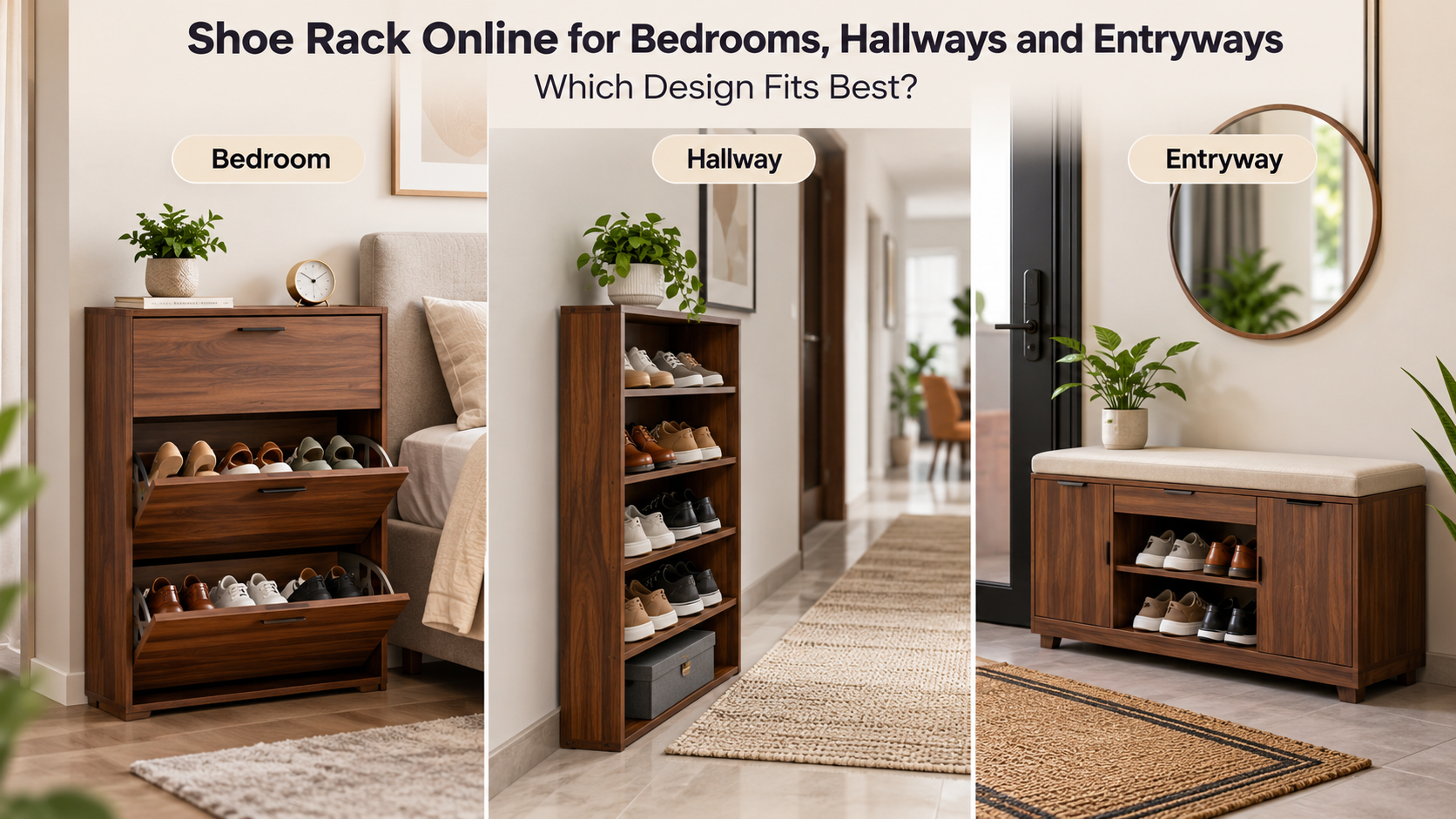
A shoe rack placed in a bedroom may need to be compact and quiet in appearance, while an entryway shoe cabinet may need doors, better organisation and a design that complements the surrounding furniture. Hallways require another approach because excessive depth can obstruct movement.
For shoppers considering furniture from brands such as DeckUp, understanding these differences can make online buying much easier. Instead of selecting a shoe rack based only on photographs, consider its dimensions, storage capacity, construction, accessibility and suitability for the intended room.
Why the Location Matters When Buying a Shoe Rack Online
The same shoe rack design does not work equally well in every part of a home. Room layout and usage patterns influence the type of storage you need.
For example, an entryway shoe rack is used several times a day. Easy access is therefore important. A bedroom shoe rack, on the other hand, may be used less frequently and can prioritise compact storage.
Before searching for a shoe rack online, identify:
-
Where the rack will be placed
-
Number of pairs you need to store
-
Available width, height and depth
-
Whether you need open or closed storage
-
Whether the rack should include additional storage
-
How frequently you access your footwear
-
Whether the design needs to coordinate with existing furniture
Taking these measurements and requirements into account can prevent common online furniture-buying mistakes.
Best Shoe Rack Designs for Different Areas of Your Home
1. Shoe Rack for the Bedroom
A bedroom is generally better suited to a compact shoe storage solution that does not dominate the room.
If your wardrobe already stores most clothing and accessories, you may only need a shoe rack for everyday footwear, formal shoes, sandals or occasional pairs.
What to look for
A bedroom shoe rack should ideally have:
-
A compact footprint
-
Adequate vertical storage
-
Shelves suited to different shoe sizes
-
A stable structure
-
A finish that complements bedroom furniture
-
Easy access without taking up excessive floor space
A wooden shoe rack can work particularly well in bedrooms where other furniture has a similar finish. If the room is small, consider a taller and narrower design instead of a wide cabinet.
When a closed shoe rack is better
A closed shoe cabinet can be useful when you want footwear to remain visually concealed. This can help maintain a cleaner appearance, particularly when the rack is positioned near a wardrobe or dressing area.
However, make sure the cabinet has enough internal space for the types of footwear you actually own. Bulky sneakers, boots and high-top shoes may require more clearance than regular sandals or flats.
2. Shoe Rack for Hallways
Hallways are often overlooked when selecting furniture. Although they can be useful locations for shoe storage, a rack that is too deep can make the passage uncomfortable.
For narrow hallways, prioritise space-efficient shoe rack designs.
Features to prioritise
Look for:
-
Reduced depth
-
Vertical storage
-
A stable base
-
Easy-to-open doors, if applicable
-
A width that leaves enough walking space
-
A design that does not create visual clutter
Measure the hallway at its narrowest point rather than measuring only the wall where you intend to place the furniture.
For example, a rack may technically fit against a wall but still make the passage difficult to use if it projects too far into the walking area.
Open or closed for hallways?
An open shoe rack provides quick access, which is useful if family members frequently change footwear. However, an open design also keeps shoes visible.
A closed shoe rack may be preferable when the hallway is directly visible from the living room or main entrance. It can keep footwear concealed and create a more organised appearance.
3. Shoe Rack for the Entryway
The entryway is one of the most practical locations for a shoe rack because footwear is typically removed and worn there.
For this location, accessibility should be a major consideration.
A well-selected entryway shoe rack can provide dedicated storage for everyday footwear while keeping the area around the entrance organised.
What makes a good entryway shoe rack?
Consider:
-
Easy access to frequently worn shoes
-
Sufficient capacity for household members
-
Closed compartments if you prefer concealed storage
-
A sturdy structure
-
A size appropriate for the entrance area
-
A finish that coordinates with the surrounding décor
If you regularly sit while putting on shoes, a shoe rack with seat can be worth considering. It combines seating and shoe storage, which can be particularly useful in an entryway.
However, do not choose this style simply because it looks convenient. Check the available space and ensure the seating height is comfortable for your household.
Open vs Closed Shoe Rack: Which Should You Choose?
One of the biggest decisions when buying a shoe rack online is choosing between open shelves and enclosed storage.
Open Shoe Rack
An open shoe rack makes footwear easy to see and access.
It can be suitable for:
-
Everyday footwear
-
Bedrooms
-
Utility areas
-
Larger entryways
-
Homes where quick access is important
The main limitation is that shoes remain visible. Dust can also accumulate more easily because the footwear is exposed.
Closed Shoe Rack
A closed shoe rack keeps footwear behind doors or enclosed compartments.
It may be better for:
-
Main entryways
-
Hallways visible from living areas
-
Minimal-looking interiors
-
Homes where footwear should remain concealed
The trade-off is accessibility. You may need to open a door or compartment every time you want a pair of shoes.
The right choice ultimately depends on whether accessibility or concealed storage is more important to you.
How to Choose the Right Shoe Rack Size Online
Size is one of the most important factors when purchasing furniture online.
Do not rely only on product photographs. Check the listed dimensions carefully.
Measure:
Width
Measure the wall or floor area where the rack will sit. Leave enough surrounding space so the furniture does not feel cramped.
Depth
Depth is particularly important for hallways and entryways. A rack that extends too far into a passage can interfere with movement.
Height
A taller rack can provide more storage without consuming additional floor width. However, make sure its height works with the room and does not interfere with windows, switches or other fixtures.
Internal shelf space
External dimensions do not tell the whole story. Check whether the individual compartments can accommodate your footwear.
A rack designed primarily for flats and sandals may not be ideal if you own several pairs of larger sneakers or boots.
Consider Your Shoe Collection Before Buying
Your footwear collection should influence the type of shoe storage you choose.
If you mainly own:
-
Sandals
-
Flats
-
Slippers
-
Casual shoes
A standard multi-shelf shoe rack may be sufficient.
If you frequently wear:
-
Sneakers
-
Sports shoes
-
Boots
-
High-top shoes
Look for a design with greater compartment height and flexible storage space.
For a family, consider the number of people using the rack rather than simply counting the number of shoes you currently own. Storage requirements can increase over time.
Wooden Shoe Rack Online: Is It a Good Choice?
A wooden shoe rack can be a practical choice for shoppers who want furniture that coordinates with other wooden pieces in the home.
Wood-based furniture is available in different finishes and construction styles, so buyers should look beyond the appearance.
Before purchasing, check:
-
Material specifications
-
Overall dimensions
-
Shelf configuration
-
Weight and stability
-
Finish
-
Assembly requirements
-
Maintenance instructions
-
Warranty or support information, where provided
A wooden finish can work particularly well alongside furniture such as wardrobes, study tables, bookshelves and cabinets.
For a coordinated room, matching or complementary finishes can make the shoe rack feel like part of the overall furniture arrangement rather than an isolated storage item.
Shoe Rack Online Buying Guide: Features Worth Comparing
When comparing products online, focus on practical features rather than photographs alone.
1. Storage capacity
Estimate how many pairs you need to store now and consider some additional capacity for future use.
2. Dimensions
Always compare the product dimensions with your available space.
3. Storage configuration
Different shelves or compartments can accommodate different footwear types.
4. Door design
If choosing a closed cabinet, consider whether the doors will be convenient in the location where you plan to place the rack.
5. Material and finish
Choose a construction and finish that suits your room and expected usage.
6. Maintenance
Consider how easily the surfaces can be cleaned, particularly if the rack will be placed near an entrance.
7. Assembly
Some online furniture requires assembly. Check whether assembly is included or whether you will need to handle it yourself.
Common Mistakes When Buying a Shoe Rack Online
Online furniture shopping makes comparison easier, but several mistakes can lead to an unsuitable purchase.
Choosing Based Only on Appearance
A stylish shoe rack may look excellent in a product photograph but may not provide enough storage for your collection.
Better approach: Compare dimensions, compartment sizes and capacity before making a decision.
Ignoring Depth
This is particularly problematic for narrow hallways.
Better approach: Measure the available depth and leave sufficient walking clearance.
Buying Too Little Storage
Choosing a rack that fits your current footwear exactly leaves no room for additional pairs.
Better approach: Allow some extra capacity.
Forgetting Door Clearance
A cabinet may fit against the wall, but its doors might require additional clearance when opened.
Better approach: Consider how the doors will operate in the actual location.
Not Checking Product Specifications
Images cannot show every important construction detail.
Better approach: Read the specifications, dimensions, material information and care instructions before ordering.
Which Shoe Rack Is Best for You?
The ideal design depends largely on where the furniture will be used.
For a bedroom, choose a compact design with sufficient storage that complements the existing furniture.
For a hallway, prioritise a shallow, space-efficient design that does not obstruct movement.
For an entryway, focus on accessibility, capacity and appearance. A closed shoe cabinet or shoe rack with seating can be particularly useful depending on your layout.
If you have limited floor space, vertical storage can help increase capacity without requiring a wider footprint.
For households with different types of footwear, look for compartments that provide enough room for sneakers and larger shoes rather than choosing a design based solely on the number of shelves.
Why Compare DeckUp Shoe Rack Options Online?
When considering a shoe rack online, DeckUp offers furniture options designed around practical home storage needs. The right choice should still be based on your room dimensions, footwear collection, storage requirements and preferred design.
Instead of choosing a product solely because it looks good online, compare the available DeckUp options based on:
-
Size
-
Storage layout
-
Material and finish
-
Open or closed construction
-
Number and type of compartments
-
Intended room
-
Overall furniture style
-
Assembly and maintenance requirements
This approach makes it easier to select a shoe storage solution that works in your actual home rather than simply looking suitable in a product image.
FAQs About Buying a Shoe Rack Online
1. What should I check before buying a shoe rack online?
Check the dimensions, storage capacity, material, compartment sizes, design, finish, assembly requirements and whether the rack will fit comfortably in your intended location.
2. Is an open or closed shoe rack better?
An open shoe rack provides faster access, while a closed shoe rack keeps footwear concealed. Choose based on whether convenience or a cleaner, concealed appearance is more important to you.
3. Which shoe rack is best for a narrow hallway?
A narrow or vertically oriented shoe rack is generally more suitable because it can provide storage while using less floor depth. Always measure the passage before purchasing.
4. Is a shoe rack with a seat useful for an entryway?
Yes, if you have enough space. A shoe rack with a seat combines footwear storage and a place to sit while putting on or removing shoes.
5. How many pairs should my shoe rack hold?
Choose capacity based on your household's current collection and allow some additional space for future footwear. Also consider the size of the individual compartments.
6. Is a wooden shoe rack suitable for bedrooms?
Yes. A wooden shoe rack can complement bedroom furniture and provide organised footwear storage. Choose a size that does not overcrowd the room.
7. Should I buy a tall or wide shoe rack?
A tall rack is generally useful when floor space is limited, while a wider rack can be better when you have sufficient wall and floor space. The choice depends on your room dimensions and storage needs.
8. How do I choose the right shoe rack for my home?
Start by identifying the room, measuring the available space and estimating the number and types of shoes you need to store. Then compare storage configuration, material, design and accessibility before ordering.
Conclusion
Choosing a shoe rack online becomes much easier when you start with the location rather than the product photograph. Bedrooms generally benefit from compact and coordinated designs, hallways require careful attention to depth, and entryways need accessible storage that works with everyday routines.
Before buying, measure your available space, assess your footwear collection and decide whether open or closed storage suits your needs. Then compare product dimensions, compartment configuration, material, finish and practical features.
With options from DeckUp, you can compare different shoe storage designs while keeping your home's layout and storage requirements at the centre of the decision. The best shoe rack is ultimately the one that fits your space, accommodates your footwear and makes everyday organisation easier.